
Dermatologist-led · Specialists in skin of colour
Chemical Peels
Clinical-grade peels that renew your skin's texture, tone and clarity, chosen and timed for melanin-rich skin.
Understanding chemical peels
Gentle, controlled renewal for clearer, more even skin
A chemical peel is a minimally invasive skin-resurfacing treatment. It uses a solution of safe, clinical-grade acids to exfoliate the outer layers of the skin, stimulating cell renewal and improving texture, tone and clarity.
Peels can use a single active ingredient or a carefully balanced combination, depending on the concern being treated. They vary in strength and depth, targeting different layers of the skin, and are available as superficial or medium-depth peels tailored to your skin type and treatment goals.
Because a single peel can target several concerns at once, chemical peels are a powerful option if you have more than one skin concern.
What peels can help with
One treatment, many concerns
- Hyperpigmentation & discolouration
- Active acne
- Post-acne marks & scarring
- Fine lines & surface wrinkles
- Blackheads & whiteheads
- Enlarged pores
- Uneven tone & rough texture
- Dry, flaky or oily skin
- Sun damage & dark spots
Why specialist care matters
In darker skin, the signs a peel is working are subtle.
Every peel has a clinical endpoint: the point at which it has done its work and should stop. The usual sign, redness, is far less visible in skin of colour, particularly in Black skin. Our clinicians are specially trained to recognise the subtler signs, so your skin is never overtreated.
The essentials
Chemical peels at a glance
Areas treated
Any area except the lips and intimate areas.
Number of treatments
Usually at least 6 sessions, but this varies between individuals and their skin requirements.
Procedure time
30–60 minutes, depending on the treatment.
Discomfort level
None to minimal.
Downtime
Usually none, but some peel depths may need 24–48 hours of downtime.
Results
Usually after 2–3 sessions. Results are gradual and improve with consistency.
Real results
Case studies
Client profile
Calming acne after years of setbacks
She came to us after seeing several doctors and aesthetic practitioners. Treatments elsewhere had left complications, and stress and hormonal changes were driving her acne. We spent six weeks repairing her damaged skin barrier with a gentle skincare routine, lifestyle changes and medical guidance for her GP, before beginning a course of chemical peels.
- Age32
- SexFemale
- HeritageCaribbean
- Skin typeFitzpatrick V
- Treatment6 chemical peels, 3–4 weeks apart
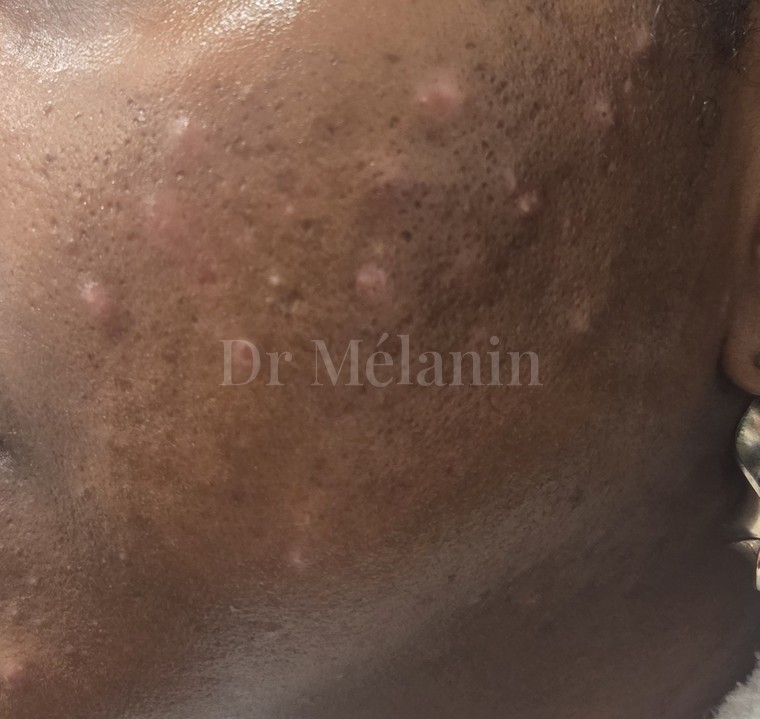
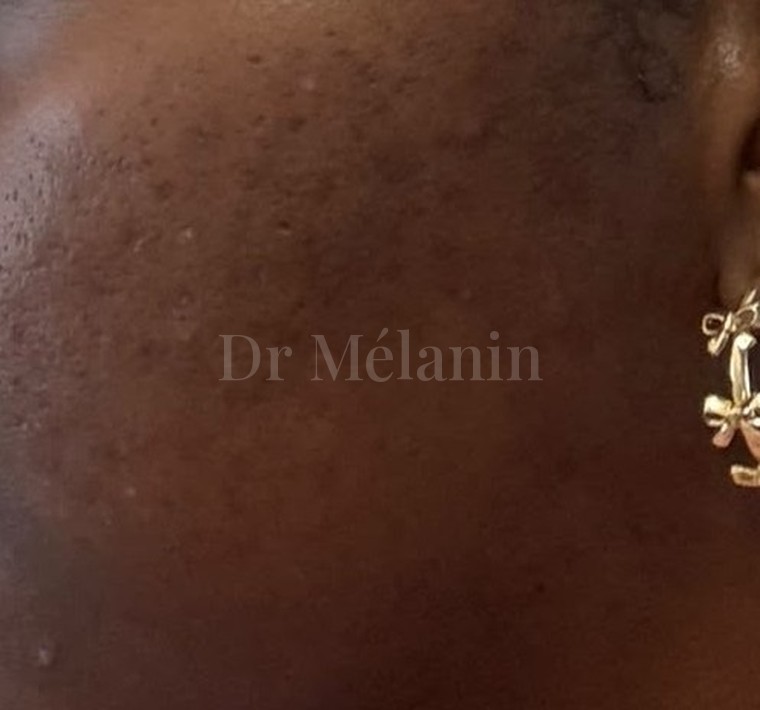
Her breakouts have reduced significantly and her skin is visibly smoother. Inflammation has settled, dark marks have faded and her oil production is better balanced. Any breakouts are now milder and clear more quickly, even around her cycle.
Client profile
Smoothing texture and fading dark marks
She had struggled with uneven texture and post-inflammatory hyperpigmentation for several years, and had tried many different treatments. When she first came to us, her skin barrier was compromised, so we began by preparing her skin with a gentle skincare routine. We then started a course of chemical peels combining glycolic, mandelic and citric acids.
- Age27
- SexFemale
- HeritageNigerian
- Skin typeFitzpatrick V
- Treatment6 chemical peels, 4 weeks apart
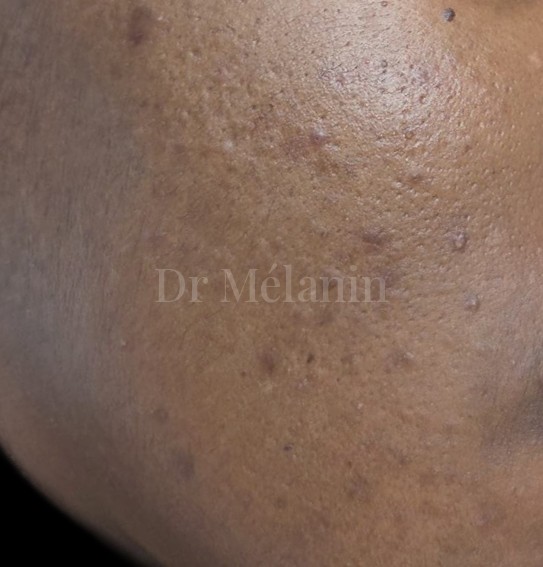
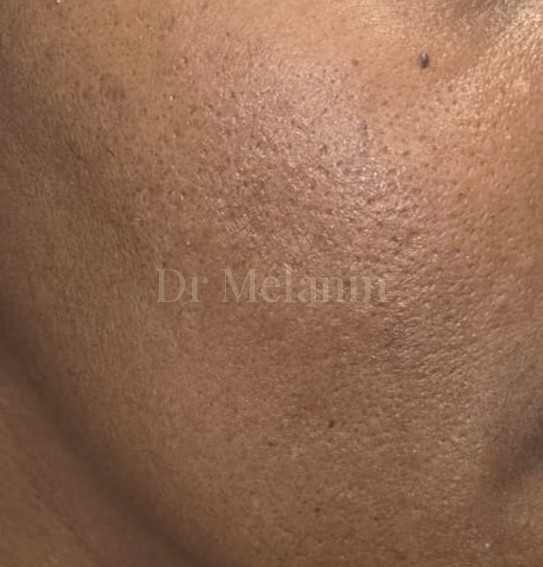
Her post-inflammatory hyperpigmentation has visibly faded, and her skin texture is smoother and more refined, with a more even tone overall.
© Dr Mélanin. Images shared with our clients' consent. Individual results vary.
Watch & learn
Videos
Reveal your most radiant skin
Everything you need to know about chemical peels
Are chemical peels safe on skin of colour?
Jahnvi’s skin journey
Your questions
Frequently asked questions
Please reach out to us if you cannot find an answer to your question.
01How do chemical peels work?
Different brands of chemical peel use different ingredients to achieve the desired results. The outcome of a peel depends on several factors, including the specific product used, its strength and formulation, the amount applied, and how long it remains on the skin.
02How many chemical peels do I need?
The exact number depends on the severity of your concerns, how your skin responds and how well you tolerate the peels. A course of 6 to 10 treatments, spaced 4–6 weeks apart, is typically recommended for optimal results; however, this can vary between individuals.
03How do I prepare my skin for a chemical peel?
We will advise a tailored skin preparation routine, including strict sun protection, for 2 weeks before your first peel. This reduces sensitivity, helps optimise your result and lowers the risk of post-inflammatory hyperpigmentation.
04What happens during a chemical peel treatment?
Your skin will be cleansed, then the peel solution is applied and left on the skin for a carefully controlled amount of time. You may feel a mild tingling, warmth or stinging sensation, which is normal. The peel is then neutralised or removed, and a calming serum or mask may be applied.
Throughout your treatment, we closely monitor your skin for signs of activity. Afterwards, it is normal for the skin to look red, feel warm and tight, especially with superficial peels. These effects are usually mild and settle within a few days.
Most treatments take 30–60 minutes, depending on the number of areas treated. You can resume normal activities the same day, with some aftercare precautions that we will discuss at your consultation and include in your aftercare advice.
05How long do the results last, and do I need maintenance?
Results from chemical peels can last a long time when your skin is supported with the right skincare and sun protection, and maintained with regular peels.
06What is the investment for chemical peels?
Please contact us via email to receive our pricing list. We ask all our clients to book a consultation with our doctors before starting any treatment. We carefully prepare a bespoke plan for every client, and some treatments may not be suitable for everyone.
07Are chemical peels painful?
Superficial peels are typically painless or cause only a mild stinging sensation during application. If you have sensitive skin, you may feel some discomfort or a burning sensation, especially with superficial to medium-depth peels.
Deeper peels tend to be more uncomfortable and come with a longer recovery period. We do not perform deep peels at Dr Mélanin because of the high risk of complications, particularly in skin of colour.
08Are there any side effects?
Chemical peels are widely used, well tolerated and extremely safe, but like all treatments they do carry some risks. Because every treatment is bespoke and every client is unique, this list may not be exhaustive.
Common, expected effects are temporary and usually settle within days. These include redness and mild swelling; dryness, tightness or flaking; peeling or shedding of the skin; increased sensitivity to sunlight; mild itching or stinging; and temporary darkening of pigmentation before it fades, which is a sign of healing, especially in skin of colour.
09Are chemical peels safe for skin of colour?
Chemical peels are very safe for darker skin tones, including Black and South Asian skin, when performed correctly, at the right time, by the right practitioner and with the right skin preparation.
Skin of colour responds differently when a peel is applied, and specialist training is needed to recognise these changes. Our clinic specialises in monitoring them, tailoring each treatment to your skin tone and type, and managing the complications that are more likely to occur in skin of colour.
10Who cannot have a chemical peel?
In some cases, a chemical peel may not be the most suitable option for you. This includes if you are pregnant or breastfeeding; have an active infection or inflammation in the treatment area; have an autoimmune disease or severe allergies; take medication that makes your skin sensitive to light (such as isotretinoin); are prone to keloid scarring; have a recent tan or sunburn; or use harsh skincare or irritants.
In other cases we may need to take extra care, such as if you take blood thinners or have allergies to certain fruits or medications. We will discuss these with you in detail at your consultation. We carry out a patch test on all our clients to make sure the peels are safe for you and your skin tone.
11Which brands do you use, and are they safe for darker skin tones?
At Dr Mélanin, we use NeoStrata ProSystem peels, including glycolic acid, mandelic acid, citric acid and retinol peels. In skin of colour, the brand or product matters less than truly understanding how to use the peel solution. That is what keeps you safe and reduces the risk of post-inflammatory hyperpigmentation (PIH).
Skin preparation, timing, the practitioner, recognising the clinical endpoints in darker skin tones and understanding your skin's tolerance are all crucial to the safety of a chemical peel. Even a very "gentle" peel, or one described as safe for darker skin tones, can cause complications such as PIH if it is used incorrectly.
12How long does it take to see results?
Chemical peels improve the quality and health of your own skin over time, so results are not immediate and can take at least 3 sessions to show. We generally do not recommend a single treatment, as you are unlikely to see lasting results.
Although chemical peels alone can give a very satisfying outcome, combining them with other treatments gives the best results, particularly for deeper acne scars, more extensive pigmentation, deep wrinkles or melasma. Results also depend on age, skin quality and lifestyle, and are not always predictable.
Disclaimer
Your results, side effects, treatment plan, downtime and recovery may vary, as all our clients are unique. The information on this page is based on the average client experience. If you would like more detail about how your experience may differ, please book an in-person consultation.