
Dermatologist-led · Specialists in skin of colour
Polynucleotides
A bioregenerative treatment that helps your skin repair and renew itself, for firmer, brighter, healthier skin, including the delicate under-eye area.
Understanding polynucleotides
Renewal that begins at a cellular level
Polynucleotide therapy is a bioregenerative injectable treatment that encourages deep repair within the skin, stimulating the fibroblasts that produce collagen and elastin.
Polynucleotides are chains of nucleotides, the building blocks of DNA and RNA, most commonly derived from salmon or trout DNA. This is highly purified to remove proteins that could trigger a reaction, so it works in harmony with your own skin.
Once absorbed, polynucleotides support tissue repair, calm inflammation and help your skin regenerate, improving its quality from within rather than simply on the surface.
Great skin is a journey, not a destination.
Dr Eckstein
What polynucleotides can help with
Healthier, more resilient skin
- Under-eye darkness
- Crepey under-eye skin
- Fine lines & wrinkles
- Dehydrated, dull skin
- Loss of firmness
- Uneven texture
- Acne scarring
- Redness & sensitivity
- Mild pigmentation
Why specialist care matters
Knowing when to stop matters as much as knowing how to start.
Every treatment has a clinical endpoint, the point at which it is effective and should go no further. In skin of colour, redness is far less visible, so this point is easy to miss, particularly when polynucleotides are combined with microneedling. Our clinicians are specially trained to read the subtler signs, so your skin is treated thoroughly but never over-treated.
The essentials
Polynucleotides at a glance
Areas treated
Most commonly the under-eyes, face and neck, though almost any area can be treated.
Number of treatments
Usually at least 2–3 sessions, but this varies between individuals and their skin requirements.
Procedure time
Around 60 minutes including numbing, depending on the areas treated.
Discomfort level
Mild to moderate, with numbing cream applied beforehand.
Downtime
Usually 48–72 hours when injected, and up to 7 days with microneedling.
Results
Usually visible at 12–16 weeks, and sometimes continuing to build for up to 6 months.
Real results
Case study
Client profile
Softening long-standing under-eye darkness
She had lived with dark under-eye circles since her teens, which had deepened with age, stress and lifestyle. A previous tear trough filler had reacted poorly and needed to be dissolved. Alongside gentle skincare and lifestyle changes, we treated her with four high-dose polynucleotide sessions, spaced 3–4 weeks apart.
- Age26
- SexFemale
- HeritageIndian
- Skin typeFitzpatrick IV
- Treatment4 high-dose polynucleotide sessions, every 3–4 weeks
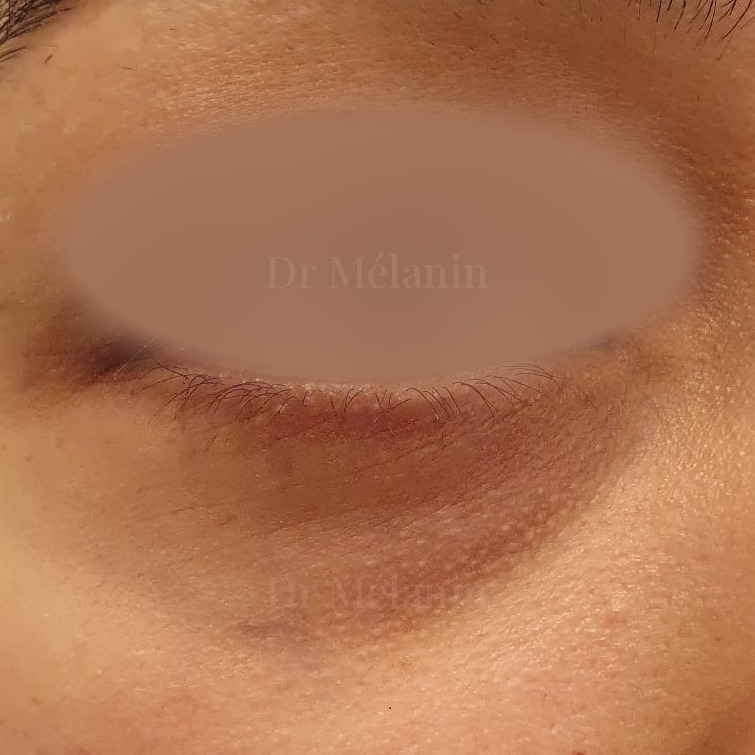
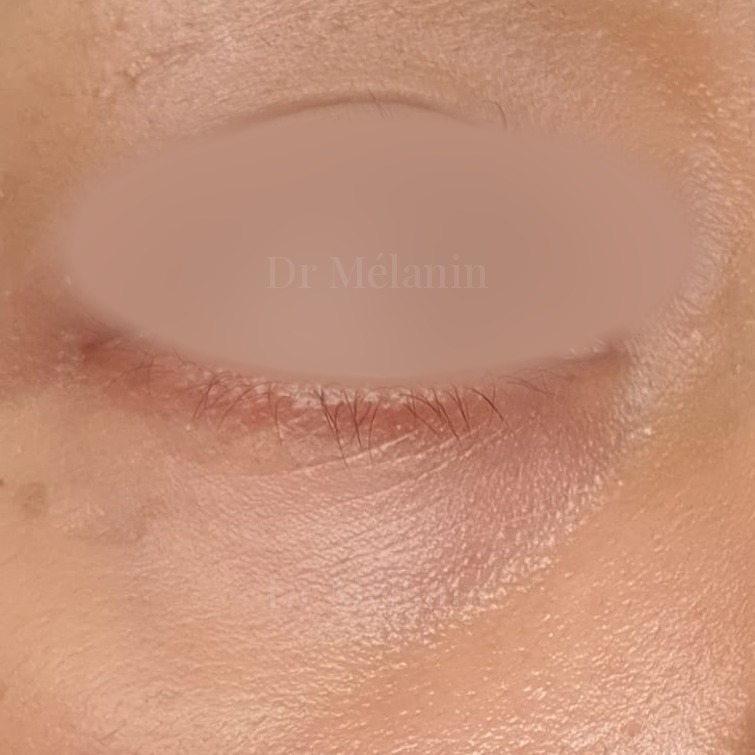
Her under-eye bags have softened and the skin looks firmer and tighter, which in turn makes her under-eye circles far less noticeable.
© Dr Mélanin. Images shared with our client's consent. Individual results vary.
Watch & learn
Videos
Polynucleotide therapy explained
An under-eye transformation after three treatments
Your questions
Frequently asked questions
Please reach out to us if you cannot find an answer to your question.
01How do polynucleotides work?
Polynucleotides work through bio-stimulation, helping your skin to repair and renew itself. They activate the cells that produce collagen and elastin, keeping skin firm, smooth and elastic, and they attract and hold water for deeper hydration and a plumper, fresher look.
They also support healing, which makes them helpful for scarring, calm inflammation and sensitivity, and help protect the skin against free radicals and environmental stress. For this reason they are also used in hair restoration, orthopaedics and ophthalmology.
02What are the benefits of polynucleotides?
Polynucleotides improve hydration, elasticity, texture, tone and glow, and soften fine lines, wrinkles, scarring and dullness. They can also help acne, rosacea and other inflammatory skin conditions, and may modestly improve pigmentation.
They are one of our favourite treatments for under-eye darkness and crepey under-eye skin, with very good results.
03Which products do you use?
We use two sterile injectables made from ultra-purified polynucleotides derived from salmon DNA:
- Plinest®, which contains only highly purified polynucleotides and is suitable for delicate areas, including under the eyes.
- Newest®, which combines polynucleotides with hyaluronic acid for added hydration and structure. It is not used under the eyes, because of a higher risk of swelling or vascular occlusion in this area.
Your clinician will choose the right product for your concerns and the area being treated.
04What does the procedure involve?
We cleanse your skin and apply numbing cream for 20–30 minutes. The polynucleotide gel is then applied and delivered into the skin with the SkinPen® microneedling device, which creates tiny channels for the gel to penetrate. In some cases, we use fine needles or a cannula instead.
You may feel mild pressure, stinging or a light scratching sensation, but most clients find it very manageable. Treatment usually takes 30–60 minutes, depending on the areas treated.
05What can I expect after treatment?
Redness, tightness, mild peeling and sensitivity usually settle within 24–72 hours. Mild peeling is especially common in skin of colour.
- Days 1–2: redness, warmth and tightness, similar to mild sunburn, with some swelling and sensitivity.
- Days 2–4: skin may feel dry, rough or slightly flaky. Occasionally, a few mild breakouts appear.
- Days 5–7: skin feels smoother and looks more radiant, while collagen and elastin continue to build for weeks.
06Are polynucleotides safe for skin of colour?
Yes. With or without microneedling, polynucleotides are very safe for skin of colour when they are performed by the right practitioner, at the right time and with proper skin preparation.
The skin's response to microneedling looks different in darker skin tones, and specialist training is needed to recognise it. We monitor these changes closely, tailor every treatment to your skin tone and type, and know how to prevent and manage the complications that are more common in skin of colour.
07Is it painful?
We apply numbing cream before every polynucleotide treatment. With microneedling, most clients describe a light scratching or tingling sensation, and pinpoint bleeding and redness are normal, usually settling within a few hours. Needle or cannula treatments can feel a little more uncomfortable, but are still well tolerated.
08Are there any side effects?
Polynucleotides are widely used and very well tolerated, but like all treatments they carry some risks. Common effects are temporary, usually resolving within 72 hours, and include redness, swelling or tenderness, bruising or pinprick bleeding, small lumps under the skin when needles are used, itching or tightness, and increased sensitivity. After under-eye treatment, vision can be mildly blurred for a few hours.
Because every client is unique, this list may not be exhaustive. We will discuss your individual risks in detail at your consultation.
09When will I see results, and how long do they last?
Smoother texture and better hydration often appear within 1–2 weeks, with firmer, brighter skin developing after 4–6 weeks as collagen builds. Results generally last several months, depending on the individual and the area treated. We usually recommend a course of 2–3 sessions, spaced 2–4 weeks apart.
10What is the investment for polynucleotides?
Please contact us via email to receive our pricing list. We ask all our clients to book a consultation with our doctors before starting any treatment. We carefully prepare a bespoke plan for every client, and some treatments may not be suitable for everyone.
Disclaimer
Your results, side effects, treatment plan, downtime and recovery may vary, as all our clients are unique. The information on this page is based on the average client experience. If you would like more detail about how your experience may differ, please book an in-person consultation.